Written by Rakesh Ranganathan. Updated September 2026
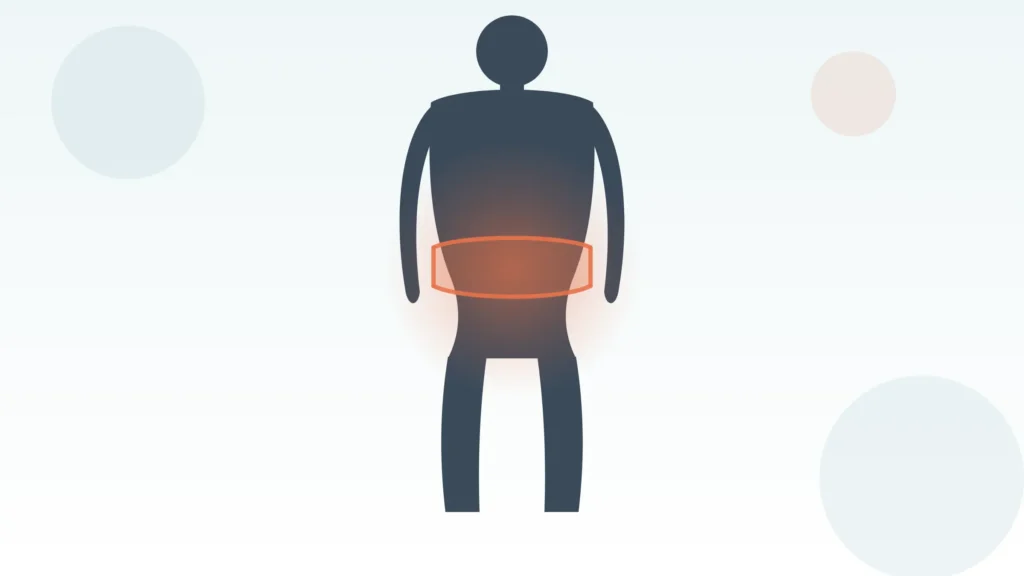
Lower back pain causes range from muscle strain to joint problems, and it’s one of the most common reasons people search for physiotherapy help, and it’s becoming increasingly common even among young adults. Many people describe this pain as “waist pain,” depending on exactly where they feel it.
People use “waist pain” to describe pain in different areas, including the lower back, sides, and hips. Those locations can point to different causes. If you’re trying to understand lower back pain more broadly, our guide to lower back pain covers the symptoms, common causes, and treatment options in more detail.
Here are the common causes, what they can feel like, and when it’s worth getting assessed.
Where Exactly Is Waist Pain Felt?
First, it helps to be clear about what you mean by “waist pain” and where it is felt.
Center of the Lower Back
This is the most common type. The pain sits right in the middle of your lower back, just above your hips. It’s often caused by muscle strain or poor posture.
Sides or Flanks
Pain on either side of your waist, around the kidney area. If this pain is severe or lasts more than a few days, it’s worth seeing a healthcare professional to rule out kidney-related problems.
Front of the Abdomen Wrapping Around
Some people feel pain that starts in the front of the abdomen and wraps around to the back. This can be related to muscle strain or, in some cases, internal organs.
The Most Common Lower Back Pain Causes
Muscle strain is a common reason for pain around the lower back and waist. When you overwork the muscles in your lower back, they become stiff and inflamed, causing pain when you move, stand up, or stretch.
This often happens after lifting heavy objects with poor technique, sudden twisting movements, or repetitive activities without giving your muscles enough time to recover. While muscle strains aren’t usually serious, they can last anywhere from a few days to several weeks if not managed properly.
SI Joint Dysfunction
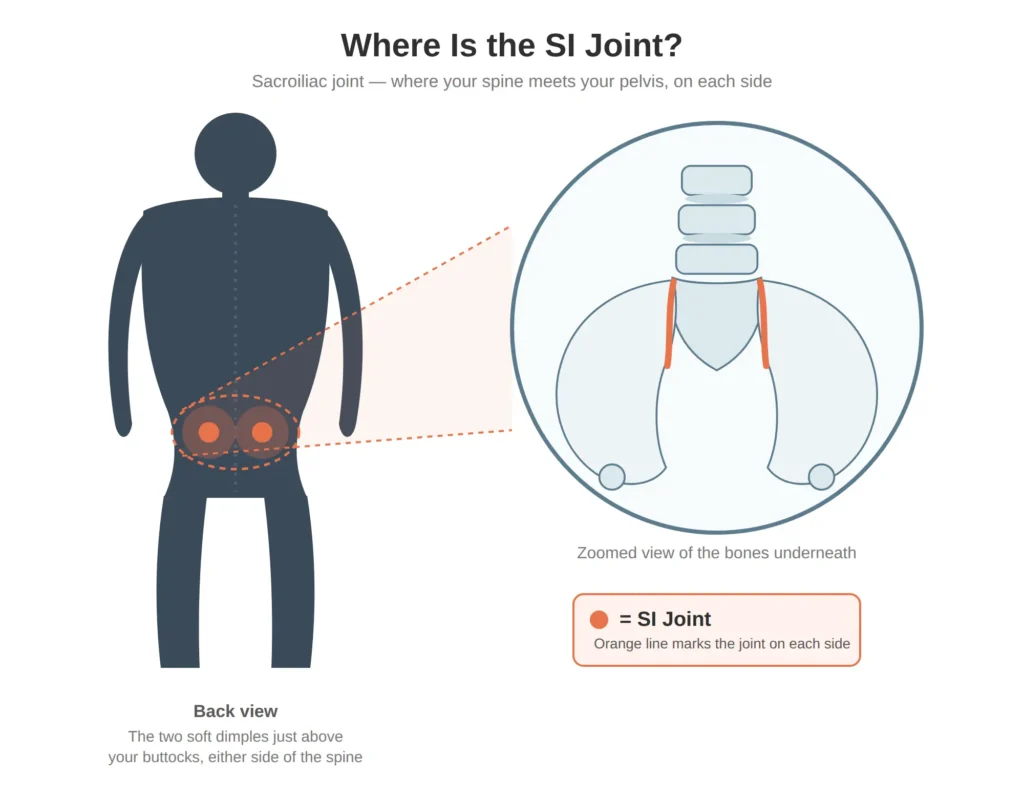
Pain around the waist can sometimes come from the sacroiliac (SI) joints. Located on each side where your spine meets your pelvis, these joints are designed primarily for stability rather than movement.
When the SI joints become irritated, they can cause pain in your lower back, buttock, hip, or even your groin. Common signs include pain when changing positions, climbing stairs, or standing on one leg. Some people also describe a feeling of pelvic instability.
Facet Joint Problems
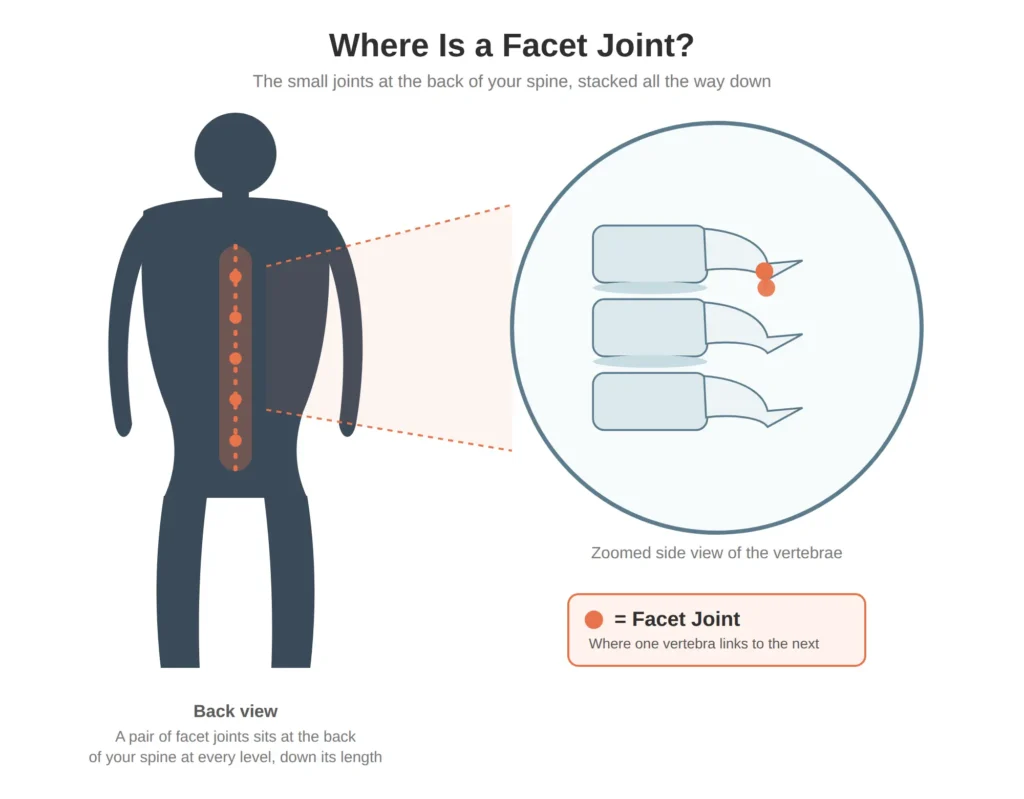
Facet joints are small joints at the back of your spine. Each one connects one vertebra with the vertebra above and below it. When these joints become irritated, you’ll typically feel a dull ache in your lower back that may become sharp with certain movements.
This irritation is commonly associated with wear and tear, aging, or repeated twisting movements. You may notice more pain when you twist your torso or arch your back.
Symptoms often settle with time, activity changes, and appropriate physiotherapy. In some cases, a doctor may also discuss other treatments, such as injections. However, if your back pain is accompanied by fever, seek medical attention promptly, as this could indicate a more serious underlying condition.
Referred Pain
Pain can also be felt in your waist even when the problem starts somewhere else. This is called referred pain. For example, the problem may start in your lower back or hip, while the pain is felt in your waist, buttock, or leg.
The nervous system can sometimes make pain feel like it’s coming from a different area than where the problem actually starts. Irritation of these nerves can cause pain to spread into other areas.
Pain that becomes worse when bending forward may suggest disc-related irritation, while pain that increases when leaning backward may point toward facet joint irritation or spinal stenosis. A physiotherapist won’t rely on one movement alone. They’ll look at how your symptoms change with movement, your medical history, and what they find during the physical assessment.
Poor Posture and Prolonged Sitting
Many people blame their pain on having “bad posture,” but posture is only part of the picture. In most cases, the bigger problem is staying in the same position for too long.
When you sit for long periods, the muscles that support your lower back work continuously to keep your spine stable. Over time, these muscles become tired, while the joints and discs in your lower back are exposed to constant pressure. You might feel fine when you first sit down, then notice stiffness or an ache after sitting for 30–60 minutes.
You may also notice that the pain is worse when standing up after sitting for a long time. That doesn’t automatically mean you’ve injured your back. Sometimes your body simply feels stiff after staying in one position for a long time.
Jobs that involve prolonged sitting, such as office work or long-distance driving, commonly trigger this pattern of pain. Walking for a few minutes or changing positions may reduce the discomfort. That pattern can suggest that staying in one position for too long is contributing to the pain.
There isn’t one “perfect” posture. Physiotherapists often recommend changing positions regularly rather than trying to maintain a single ideal sitting position all day. Taking short movement breaks every hour, adjusting your workstation, and strengthening your core and hip muscles can all help reduce recurring waist pain. For some practical examples, see our guide to physiotherapy exercises for lower back pain.
Sharp vs. Dull vs. Aching — What Your Pain Type Might Mean
Sharp pain: Sharp pain often feels sudden, stabbing, or like something “catches” when you move. It may happen when standing up after sitting for a long time, twisting your body, or bending to pick something up. Sharp pain can have several causes, so the sensation alone can’t tell you what’s wrong. What matters is where it occurs, what brings it on, and whether you have other symptoms.
Dull or aching pain: Dull pain is usually a constant, heavy ache that builds up gradually rather than appearing suddenly. You may notice it after sitting for a long time or toward the end of the day. A dull ache can happen after prolonged sitting, physical activity, or other forms of sustained loading. The sensation by itself doesn’t tell you which tissue is responsible.
Morning stiffness: If your waist feels stiff when you first get out of bed but gradually loosens as you start moving, it may suggest that your joints, muscles, or other supporting tissues have become stiff after remaining in one position overnight. Morning stiffness can happen for several reasons, so it needs to be considered alongside your other symptoms.
Pain quality can be helpful, but you can’t determine the cause from that alone. A physiotherapist will also look at where the pain is, what makes it better or worse, how long you’ve had it, and whether you have other symptoms.
What a Physiotherapist Looks For
At a physiotherapy assessment, you’ll usually be asked about more than just where the pain is. They’ll want to know what brings the pain on, what eases it, how it has changed, and how it’s affecting your daily activities.
They’ll ask you to perform movements such as bending forward, leaning backward, twisting your torso, or walking. They’ll watch how your symptoms change with these movements.
Bending forward, for example, may be one finding they consider when assessing possible disc-related irritation. If leaning backward is more painful, they may suspect irritation of the facet joints or other structures at the back of the spine. These findings are only part of the assessment and are combined with your medical history and other examination results.
Your physiotherapist may also perform specific tests to assess your lower back, SI joints, hips, and surrounding muscles. These might include standing on one leg, moving from sitting to standing, or applying gentle pressure to certain areas to see which movements or positions reproduce your symptoms.
They’ll also observe how you sit, stand, walk, and move throughout the assessment. They may also assess your movement, muscle strength, flexibility, and posture to understand what could be contributing to your symptoms.
The assessment is about putting the symptoms, movement findings, and medical history together so the treatment can address what’s contributing to the problem.
When to See a Physiotherapist
Most episodes of waist pain improve within a few days or weeks, especially if they’re caused by a minor muscle strain or temporary irritation.
If you’re wondering how long lower back pain usually takes to improve, we’ve covered recovery time in more detail here.
If the pain isn’t improving or keeps coming back, consider getting it assessed.
Consider seeing a physiotherapist if your pain lasts longer than two weeks, keeps returning, or makes everyday activities such as walking, sitting, sleeping, or working uncomfortable. Persistent pain may indicate that the underlying problem isn’t resolving on its own.
You should also seek an assessment if your pain is becoming more severe instead of gradually improving, or if you notice ongoing morning stiffness that lasts longer than 30 minutes. Persistent morning stiffness is another reason to discuss your symptoms with a healthcare professional.
Seek urgent medical attention if your waist pain is accompanied by fever, unexplained weight loss, loss of bladder or bowel control, significant weakness or numbness in your legs, or severe pain following a major injury. Although these symptoms are uncommon, they may indicate a more serious condition that requires prompt medical assessment.
A physiotherapist can identify the most likely source of your pain, recommend appropriate exercises and activity modifications, and help you return to normal movement while reducing the risk of your symptoms recurring.
Common Questions About Waist Pain (FAQ)
What causes waist pain?
Waist pain can have several causes depending on where you feel it and what makes it worse. Common causes include muscle strain, disc irritation, facet joint problems, SI joint dysfunction, and prolonged sitting or repetitive movements. Less commonly, pain around the waist may come from internal organs such as the kidneys, which is why the location and pattern of your symptoms are important.
Why does my waist hurt after sitting for a long time?
Sitting for long periods places continuous load on the muscles, joints, and discs in your lower back. Over time, these tissues can become stiff or irritated, making it uncomfortable to stand up or walk. If your pain eases after moving around for a few minutes, prolonged sitting may be contributing to your symptoms.
Is waist pain the same as lower back pain?
Not always. “Waist pain” is a general term that people use to describe pain around the belt line, including the lower back, sides, or front of the waist. Lower back pain refers more specifically to pain in the lumbar spine. The exact location helps narrow down the possible causes.
When should I see a physiotherapist for waist pain?
Consider seeing a physiotherapist if your pain lasts longer than two weeks, keeps returning, limits your daily activities, or becomes worse instead of improving. You should also seek medical attention promptly if your pain is accompanied by fever, unexplained weight loss, loss of bladder or bowel control, significant weakness or numbness in your legs, as these symptoms may require urgent assessment.
If you’re ready to start addressing the problem, see our guide to physiotherapy exercises for lower back pain for safe, structured exercises to try next.
Medical Disclaimer
This article is for general informational purposes only and does not constitute medical advice. It is not a substitute for professional diagnosis, treatment, or advice from a licensed physiotherapist or qualified healthcare provider. Always consult a healthcare professional before starting any new exercise program, especially if you are experiencing pain, have an existing injury, or have a pre-existing medical condition. See our How We Review Our Content page for how this article was researched and checked.

Rakesh Ranganathan researches physiotherapy content and SEO for clinics. Based in Ontario, Canada, he writes about lower back pain to help patients find clear, reliable information and to help physio clinics get found online.