Lower back pain is something most people experience at some point in their lives, and it can make even simple movements feel uncomfortable or frustrating. It usually affects the lower part of the spine — an area that carries much of the body’s weight and plays a major role in everyday movement.
In many cases, lower back pain develops when the muscles or soft tissues in the back become strained or irritated. This can happen from things like sitting for long hours, lifting something the wrong way, or making a sudden movement. In other situations, the pain may be related to joint stiffness, age-related changes, or issues involving the spinal discs.
Although lower back pain can feel worrying, understanding what’s causing it is an important first step toward dealing with it properly. In this article, we’ll look at the most common reasons lower back pain occurs and why it can affect people in different ways. Understanding the most common lower back pain causes can help explain why discomfort develops and how it affects daily life.
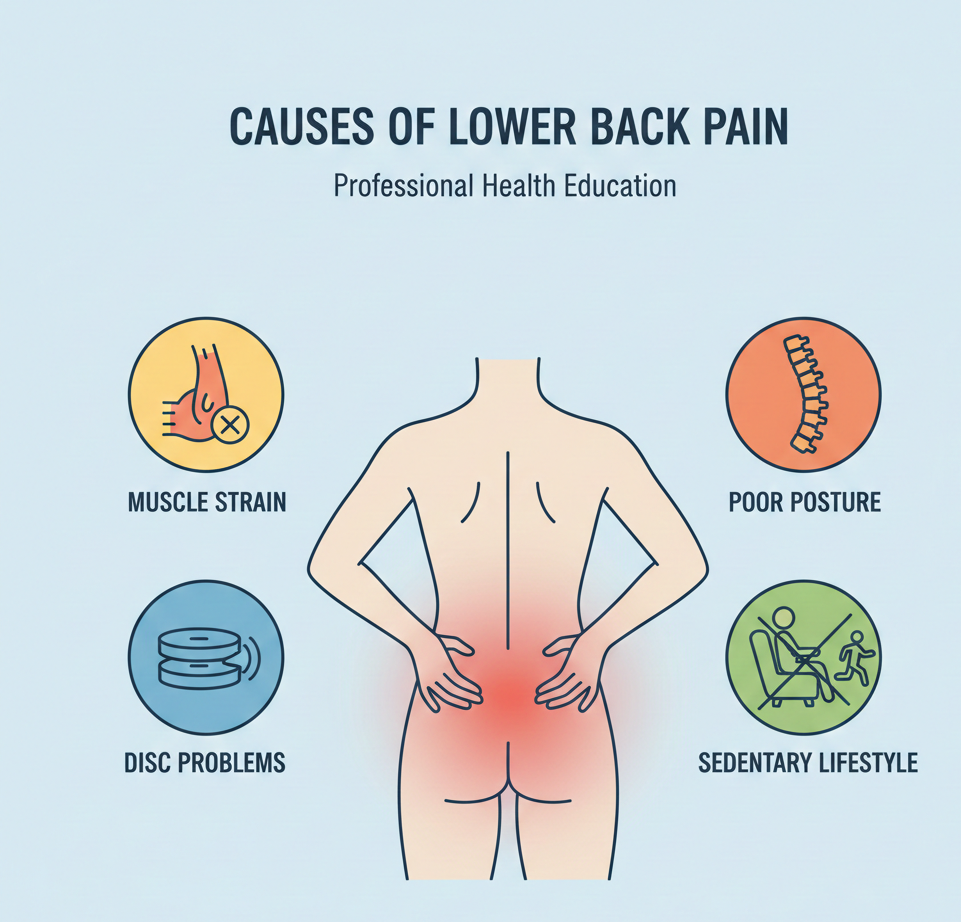
Muscle & Soft Tissue Lower Back Pain Causes
One of the most common reasons people experience lower back pain is strain or irritation in the muscles and soft tissues of the back. These muscles are constantly working to support posture, movement, and balance, so it doesn’t take much for them to become overworked.
Everyday actions often play a role. Sitting for long hours without proper support, lifting something heavy with poor technique, or twisting suddenly can place extra stress on the lower back. Even activities that don’t seem intense at the time can lead to discomfort later, especially if the muscles aren’t used to that type of movement.
Muscle-related lower back pain often feels like tightness, soreness, or stiffness. It may worsen with certain movements or positions and improve with others. In many cases, this type of pain develops gradually rather than all at once, which can make it difficult to pinpoint a single cause.
While muscle and soft tissue strain is common, it’s also one of the more manageable causes of lower back pain once it’s properly understood. Recognizing how daily habits and movements affect the back can help explain why discomfort appears even without a clear injury.
Daily Habits & Injury-Related Causes
Lower back pain doesn’t always come from one specific injury. In many cases, it builds up slowly due to everyday habits and repeated movements that place ongoing stress on the lower back.
Spending long periods sitting, especially with poor posture, can put continuous pressure on the lower spine. Jobs or routines that involve frequent bending, twisting, or lifting may also contribute, even if those movements don’t feel painful at the moment. Over time, this repeated stress can irritate the back and lead to discomfort.
Sudden injuries are another common factor. Slipping, falling, lifting something unexpectedly heavy, or moving awkwardly can strain the lower back in a short moment. Sports activities, particularly those involving quick direction changes or impact, may also trigger lower back pain if the body isn’t well prepared for those movements.
What makes habit-related and injury-related back pain tricky is that symptoms don’t always appear right away. Pain may show up hours or even days later, which can make it hard to connect the discomfort to a specific action. This is why lower back pain can sometimes feel confusing or unpredictable.
Disc & Spine-Related Causes
In some cases, lower back pain is connected to changes in the discs or structures of the spine itself. The spine is made up of small bones stacked on top of one another, with soft discs in between that act as cushions. These discs help absorb shock and allow the back to move smoothly.
Over time, discs can become irritated, worn down, or slightly displaced. When this happens, they may place pressure on nearby nerves, leading to pain in the lower back. Some people may also notice discomfort that travels into the hips, buttocks, or legs, depending on which nerves are affected.
It’s important to know that disc-related changes are very common, especially as people get older. Many people have disc bulges or age-related spine changes without experiencing severe pain. When discomfort does occur, it doesn’t automatically mean something serious is wrong or that surgery is needed.
Spine-related lower back pain can vary widely from person to person. Some people feel a dull, ongoing ache, while others notice sharper pain during certain movements or positions. Understanding that the spine naturally changes over time can help explain why back pain sometimes appears even without a clear injury.
Structural & Age-Related Causes
As people age, it’s normal for the body to go through gradual changes, and the lower back is no exception. Wear and tear in the joints and spine can affect how the back moves and feels, sometimes leading to stiffness or ongoing discomfort.
Conditions such as joint stiffness or arthritis can reduce flexibility in the lower back, making certain movements feel more difficult than they used to. Over time, the spaces between joints may narrow, which can contribute to aching or soreness, especially after long periods of activity or rest.
Some people are also born with slight differences in the shape or alignment of their spine. These structural variations don’t always cause problems, but in certain cases they can place uneven stress on the lower back and lead to pain later in life.
It’s important to remember that age-related and structural changes don’t automatically mean something is “wrong.” Many people experience these changes without constant pain. When discomfort does appear, it’s often influenced by how these changes interact with daily habits, movement patterns, and overall activity levels.
Less Common Medical Causes
In some situations, lower back pain may be linked to medical conditions that aren’t directly related to muscles, joints, or daily movement. These causes are less common, but they’re worth mentioning for completeness.
Certain internal issues, such as kidney-related problems or infections, can sometimes cause pain that feels like it’s coming from the lower back. Inflammatory conditions or other underlying health issues may also contribute to ongoing discomfort in this area.
That said, these medical causes are far less frequent than muscle strain, posture-related stress, or age-related changes. Most people with lower back pain are dealing with everyday mechanical or lifestyle factors rather than a serious medical condition.
If back pain feels unusual, severe, or comes with other concerning symptoms, it’s important not to ignore it. Knowing that rare causes exist doesn’t mean something serious is happening — it simply highlights why persistent or unexplained pain deserves attention.
Risk Factors That Increase Lower Back Pain
Certain factors can make lower back pain more likely to develop or persist, even when there isn’t a clear injury. These risk factors don’t cause pain on their own, but they can increase strain on the lower back over time.
Spending long hours sitting, especially without proper support, is one of the most common contributors. A lack of regular movement can weaken the muscles that support the spine, making the lower back more vulnerable. On the other hand, repetitive heavy lifting or physically demanding work can also place ongoing stress on the area.
Lifestyle factors may play a role as well. High stress levels can lead to muscle tension, which sometimes shows up as back pain. Carrying excess body weight, smoking, or not getting enough physical activity can also affect how well the lower back handles daily demands.
Having one or more of these risk factors doesn’t mean lower back pain is inevitable. However, being aware of them can help explain why pain may develop gradually rather than from a single, obvious cause.
When Is Lower Back Pain a Serious Problem?
Most cases of lower back pain are not linked to serious problems. Still, there are certain signs that shouldn’t be ignored, especially if the pain feels unusual or different from what you’ve experienced before.
If lower back pain is severe, continues to worsen, or doesn’t improve over time, it’s worth paying closer attention. Symptoms such as ongoing numbness or weakness in the legs, difficulty controlling bladder or bowel function, unexplained weight loss, or pain that begins after a major fall or accident may indicate the need for medical evaluation.
These situations are not common, but recognizing them is important. Being aware of changes in your body and noticing symptoms that don’t feel normal can help ensure potential issues are addressed early.
For most people, lower back pain is related to everyday causes rather than serious conditions. Understanding when pain may need professional attention can offer reassurance and help avoid unnecessary worry.
Why Does Lower Back (or Waist) Pain Hurt When You Bend?
Many people notice their lower back hurts more when they bend forward — for example, when tying shoes or picking something up. This usually happens because bending puts extra pressure on certain muscles and discs in the lower back, especially if those areas are already irritated.
Common Reasons Pain Increases When Bending
- Muscle strain – tight or overworked muscles can feel sharper when stretched forward.
- Disc irritation – bending increases pressure on spinal discs, which can aggravate sensitivity.
- Poor bending mechanics – rounding the back instead of hinging at the hips adds strain.
- Joint stiffness – restricted movement can make forward bending uncomfortable.
In many mild cases, this type of pain improves with time, gentle movement, and proper guidance. However, sharp or worsening pain should not be ignored.
If you’re unsure how long this kind of pain typically takes to improve, read our detailed guide on recovery timelines.
Conclusion
Lower back pain can feel confusing or frustrating, especially when it interferes with daily activities. In many cases, it develops due to a combination of muscle strain, daily habits, age-related changes, or lifestyle factors rather than a single clear cause.
Understanding why lower back pain happens is an important first step. When you know what may be contributing to the discomfort, it becomes easier to make sense of your symptoms and decide what to do next.
While lower back pain often improves with the right approach, recovery can look different for everyone. Factors such as the underlying cause, activity level, and consistency all play a role. Learning what to expect over time can help reduce uncertainty and set realistic expectations moving forward.
If you want a structured overview of lower back pain, including recovery timelines and treatment options, visit the main Lower Back Pain guide.