One of the first questions people ask when dealing with lower back pain is how long it will take to feel better. When pain affects daily life, it’s natural to want a clear timeline and a sense of when things will improve. Physiotherapy lower back pain recovery is one of the most common concerns for people dealing with ongoing or recent back pain.
The reality is that recovery from lower back pain doesn’t follow a fixed schedule. Some people notice changes quickly, while others need more time, depending on what’s causing the pain and how their body responds to treatment. Understanding physiotherapy lower back pain recovery timelines can help set realistic expectations and reduce frustration during treatment.
This article explains what usually affects recovery time, what kind of progress people commonly experience, and why improvement can look different from one person to another.
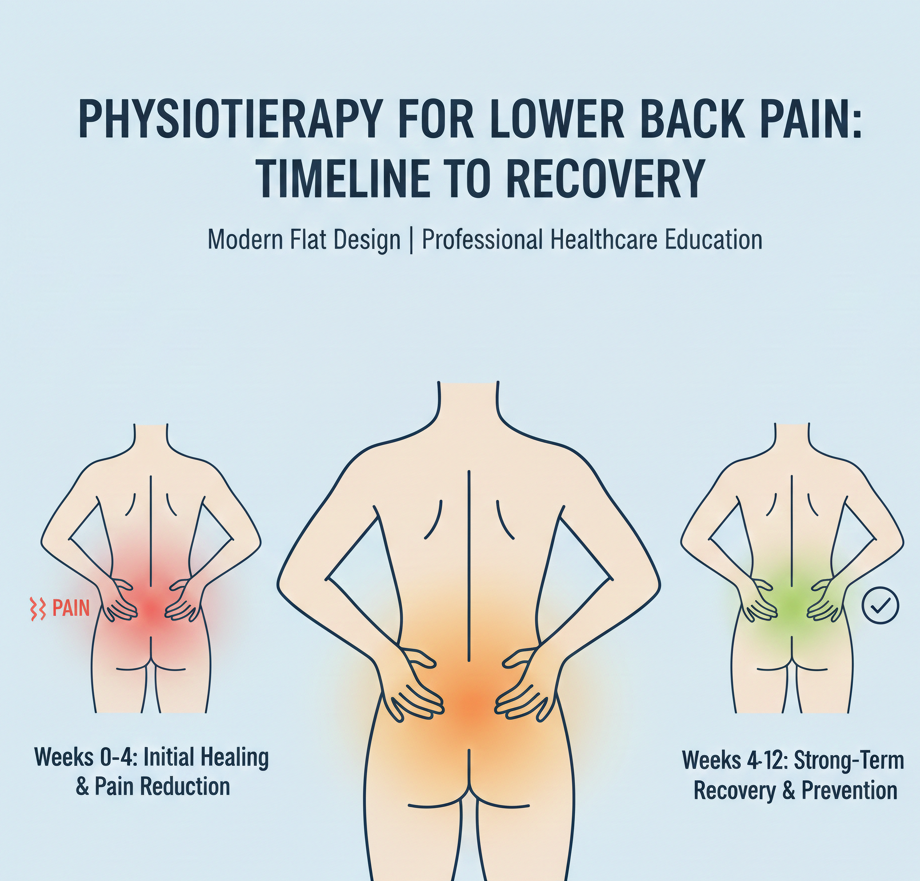
Physiotherapy Lower Back Pain Recovery Timelines
There isn’t a single answer to how long physiotherapy takes to help lower back pain. Recovery time can vary widely from person to person because lower back pain itself can come from many different causes.
For example, pain that started recently due to muscle strain may improve faster than pain that has been present for months or years. Long-standing back pain often involves more than one factor, which can make progress slower and more gradual.
Comparing your recovery to someone else’s can be misleading. Two people with similar symptoms may improve at very different rates, depending on their activity levels, daily habits, and how consistently they follow their care plan.
Typical Recovery Timelines (General Ranges)
Although there’s no exact timeline, many people like to have a general idea of what recovery might look like. In cases of mild or recent lower back pain, some people begin noticing improvement within a few weeks of starting physiotherapy.
For ongoing or recurring back pain, progress often happens more gradually. Improvements may develop over several weeks or months as strength, movement, and confidence slowly return.
When lower back pain has been present for a long time, recovery may take longer and involve steady, incremental changes rather than quick relief. In these situations, progress is often measured by improved function and reduced flare-ups rather than pain disappearing completely.
These are general patterns, not guarantees. Recovery can move faster or slower depending on individual circumstances.
What Affects How Long Recovery Takes
Several factors influence how quickly lower back pain improves with physiotherapy. One of the most important is the underlying cause of the pain, whether it’s related to muscle strain, joint stiffness, disc irritation, or a combination of factors.
Consistency also plays a major role. Following recommended exercises, staying active within safe limits, and maintaining healthy movement habits can support steady progress over time.
Daily routines outside of therapy matter as well. Long periods of sitting, poor posture, high stress levels, or lack of regular movement can slow improvement, even when therapy sessions are going well.
Overall health and lifestyle factors, such as sleep, stress, and general activity levels, can also influence how the body responds and how quickly changes are felt.
Signs Physiotherapy Is Helping
Progress doesn’t always mean pain disappears right away. In many cases, the first signs of improvement are more subtle.
People may notice they can move more easily, feel less stiff in the morning, or perform daily activities with less discomfort. Pain may become less intense or occur less frequently, even if it hasn’t gone away completely.
Another common sign is increased confidence in movement. Feeling less guarded or fearful about bending, lifting, or walking can be an important part of recovery.
These changes often appear before full pain relief and can be good indicators that physiotherapy is having a positive effect.
When Progress Feels Slow
It’s common for recovery to feel uneven. Some days may feel better than others, and progress can sometimes plateau for a period of time.
This doesn’t necessarily mean physiotherapy isn’t working. The body often adapts gradually, and improvement isn’t always linear. Adjustments to exercises or daily habits may be needed as recovery continues.
Understanding that slower phases are a normal part of the process can help reduce frustration and prevent people from giving up too early.
Conclusion
Recovery from lower back pain takes time, and the pace can vary widely depending on the cause of the pain, daily habits, and individual response to physiotherapy. While some people notice improvement within weeks, others may experience more gradual changes over a longer period.
Rather than focusing only on how fast pain disappears, it can be more helpful to look for signs of progress, such as improved movement, reduced stiffness, and greater confidence in daily activities.
Understanding what affects recovery time can help set realistic expectations and reduce uncertainty. Learning more about the underlying cause of lower back pain is often an important step in knowing what to expect moving forward.
For a broader overview of lower back pain, including common causes and treatment approaches, visit the main Lower Back Pain guide.
Medical Disclaimer
This article is for general informational purposes only and does not constitute medical advice. It is not a substitute for professional diagnosis, treatment, or advice from a licensed physiotherapist or qualified healthcare provider. Always consult a healthcare professional before starting any new exercise program, especially if you are experiencing pain, have an existing injury, or have a pre-existing medical condition. See our How We Review Our Content page for how this article was researched and checked.

Rakesh Ranganathan researches physiotherapy content and SEO for clinics. Based in Ontario, Canada, he writes about lower back pain to help patients find clear, reliable information and to help physio clinics get found online.