Written By Rakesh Ranganathan. Updated September 2026
Lower back pain is common and can make everyday activities uncomfortable. It may develop after muscle strain, prolonged sitting, lifting, or other types of physical activity. The cause and severity can vary from person to person.
Gentle exercise can help some people manage lower back pain while improving movement, flexibility, and strength. The right exercises depend on your symptoms and how your body responds to movement.
If you’re looking for a broader overview first, see our guide to lower back pain for information about common causes, symptoms, and treatment.
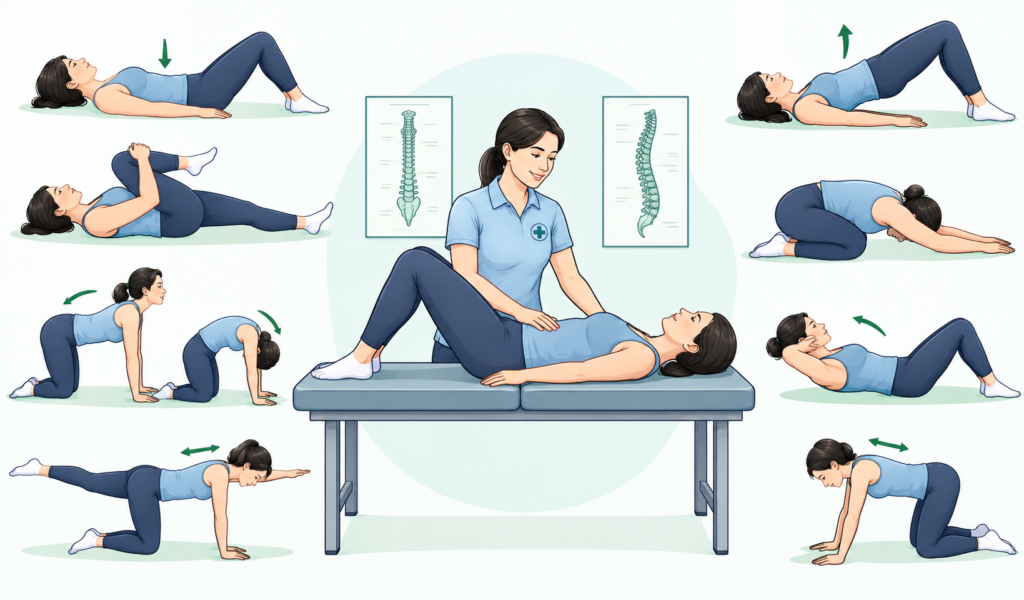
Below are seven exercises, with instructions for performing each one and tips for starting safely.
What are the best physiotherapy exercises for lower back pain?
There is no single exercise routine that works for everyone with lower back pain. However, pelvic tilts, knee-to-chest stretches, cat-cow movements, bird dog exercises, glute bridges, child’s pose, and partial crunches can be useful options depending on your symptoms and ability.
These exercises focus on movement, flexibility, and strengthening different areas around the lower back, hips, and core.
Why physiotherapy exercises help lower back pain
Exercise can help improve movement and strength around the lower back, hips, and core. Building strength and control in these areas can support everyday movement and make some activities easier.
Regular exercise may help:
- improve flexibility
- build strength and movement control
- reduce stiffness
- support comfortable movement
- make daily activities easier
Exercises should be introduced gradually rather than forced through significant pain. If a movement causes sharp pain, numbness, or clearly worsening symptoms, stop and get professional advice.
According to the Mayo Clinic, gentle stretching and strengthening exercises can help improve flexibility and support recovery from lower back pain.
The NHS also recommends staying active and performing gentle exercises rather than resting for long periods.
1. Pelvic tilt
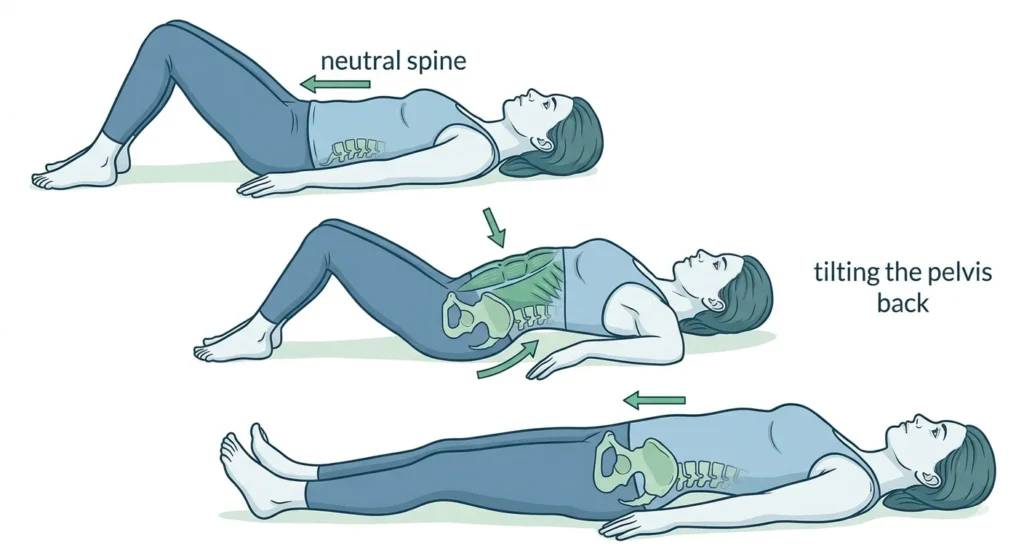
Pelvic tilts are a simple movement that can help you practise controlling the position of your pelvis and lower back.
How to do it
- Lie on your back with your knees bent and your feet flat on the floor.
- Gently tighten your stomach muscles.
- Press your lower back toward the floor.
- Hold for about 5 seconds.
- Relax and repeat.
Beginner tip
Start with around 10 repetitions. Keep the movement slow and controlled rather than trying to move quickly.
2. Knee-to-chest stretch
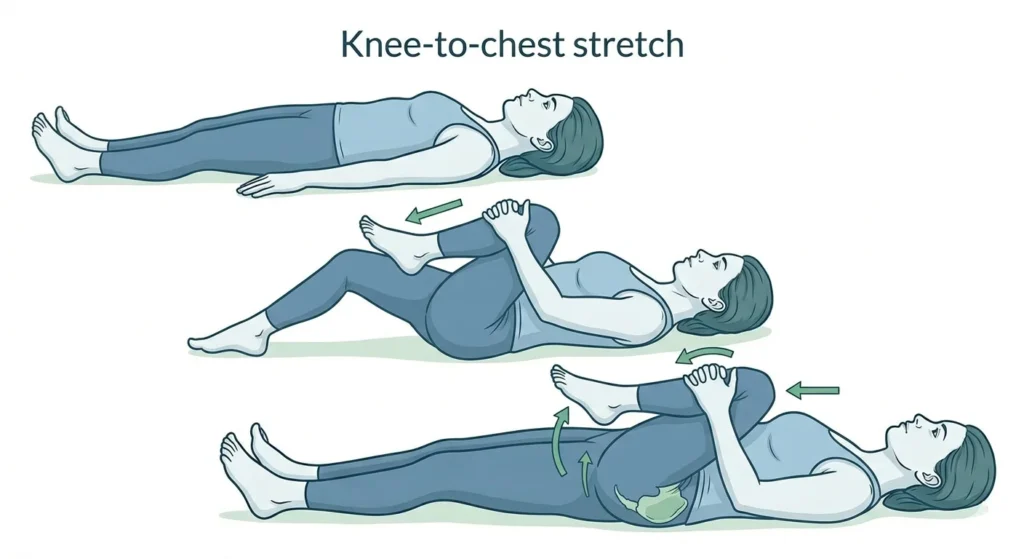
The knee-to-chest stretch gently moves the hip and lower back. Some people find it useful when their lower back feels stiff.
How to do it
- Lie on your back with both knees bent.
- Bring one knee toward your chest.
- Hold your knee with both hands.
- Hold the stretch for 15 to 20 seconds.
- Lower your leg and repeat with the other side.
Beginner tip
Do not pull the knee forcefully toward your chest. The stretch should feel comfortable and controlled rather than painful.
3. Cat-cow stretch
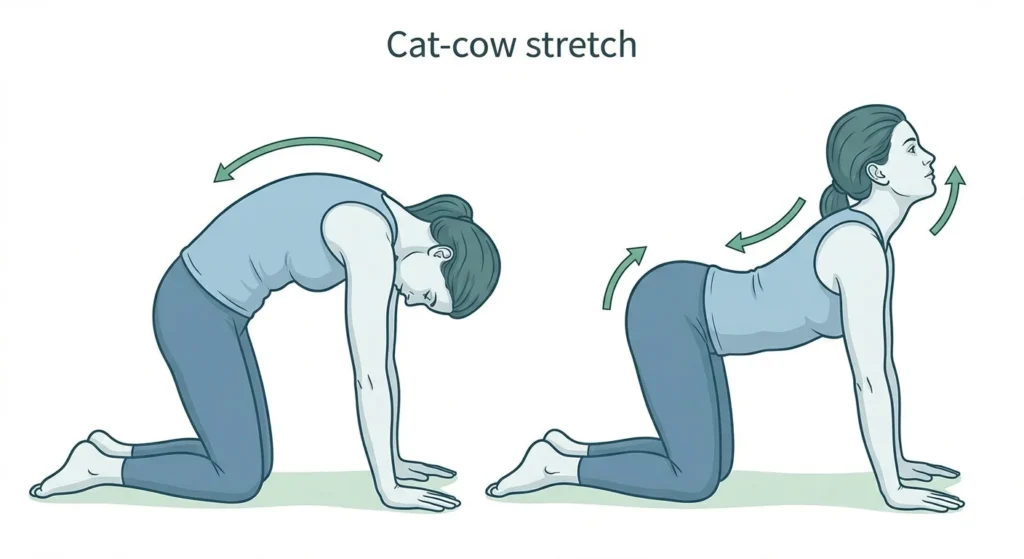
The cat-cow movement gently takes the spine through different positions and can help with mobility when the back feels stiff.
How to do it
- Start on your hands and knees.
- Slowly round your back upward.
- Then slowly lower your belly and lift your head and chest slightly.
- Move between the two positions in a slow, controlled way.
Beginner tip
Try 10 to 15 repetitions while breathing normally. Keep the movement comfortable rather than trying to achieve a large range of motion.
4. Bird dog exercise
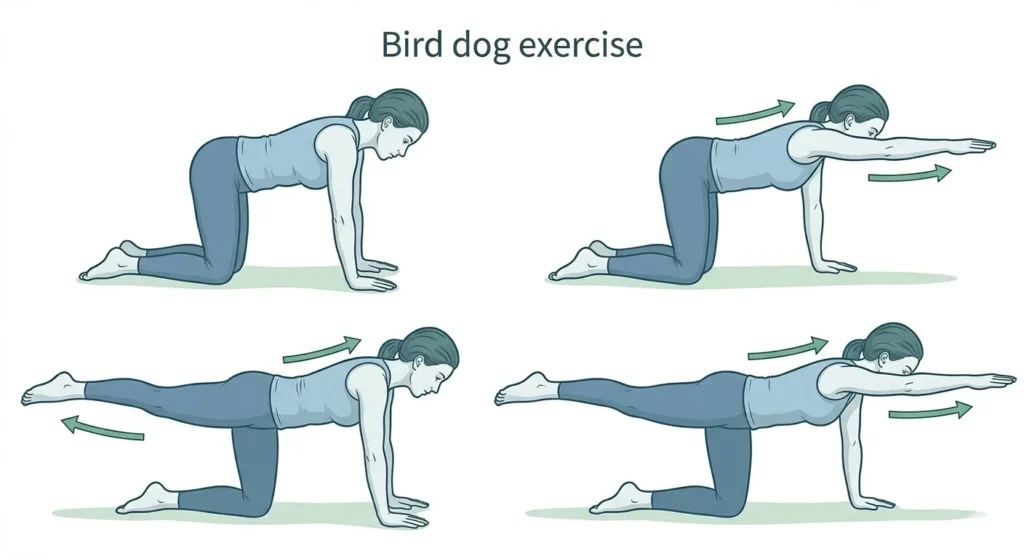
Bird dog challenges your balance and requires you to control your trunk while moving your arms and legs.
How to do it
- Start on your hands and knees.
- Extend your right arm forward and your left leg backward.
- Keep your back relatively stable and your hips level.
- Hold for about 5 seconds.
- Return to the starting position and switch sides.
Beginner tip
If moving one arm and the opposite leg together feels difficult, practise lifting only one arm or one leg at a time.
5. Glute bridge
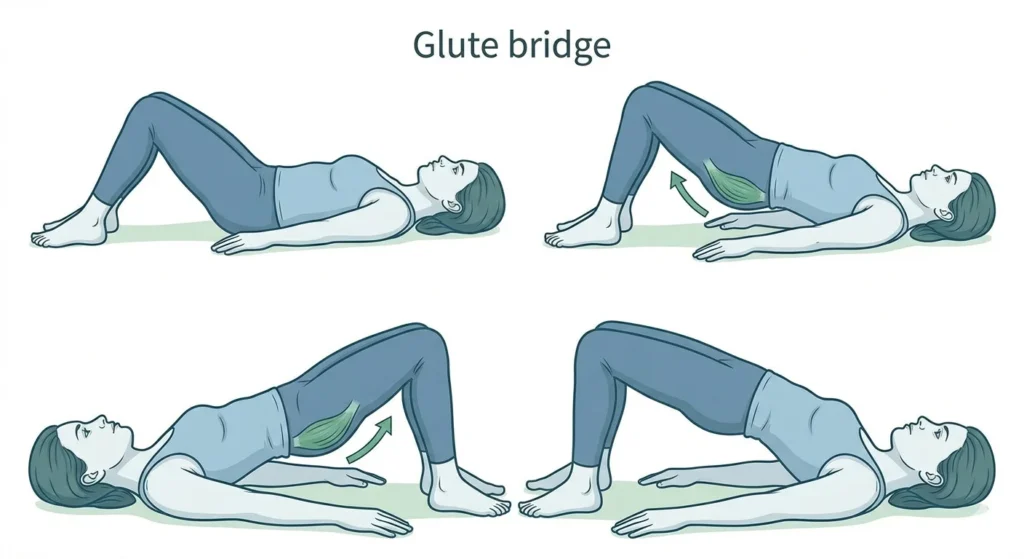
Glute bridges strengthen the glute muscles and can help build strength around the hips and trunk.
How to do it
- Lie on your back with your knees bent and feet flat on the floor.
- Press through your feet.
- Slowly lift your hips upward.
- Hold for about 5 seconds.
- Lower your hips slowly and repeat.
Beginner tip
Start with around 10 repetitions and focus on controlled movement. Avoid lifting your hips higher than you can control comfortably.
6. Child’s pose
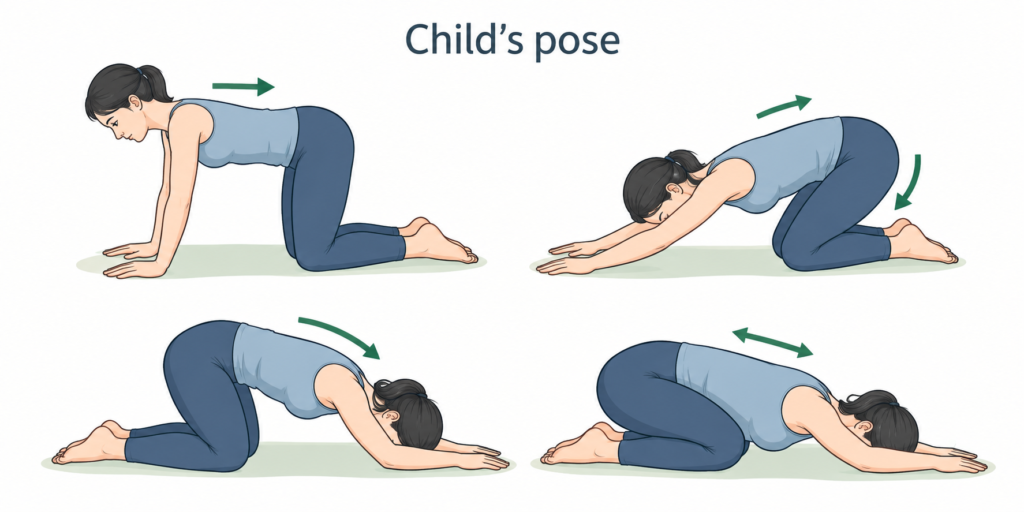
Child’s pose gently stretches the back and hips. It may feel comfortable for some people, but it is not suitable for everyone with back pain.
How to do it
- Kneel on the floor.
- Sit back toward your heels.
- Stretch your arms forward.
- Lower your chest toward the floor as far as feels comfortable.
- Hold for 20 to 30 seconds.
Beginner tip
If the position feels uncomfortable, widen your knees slightly or reduce how far you move into the stretch. Do not force the position.
7. Partial crunch
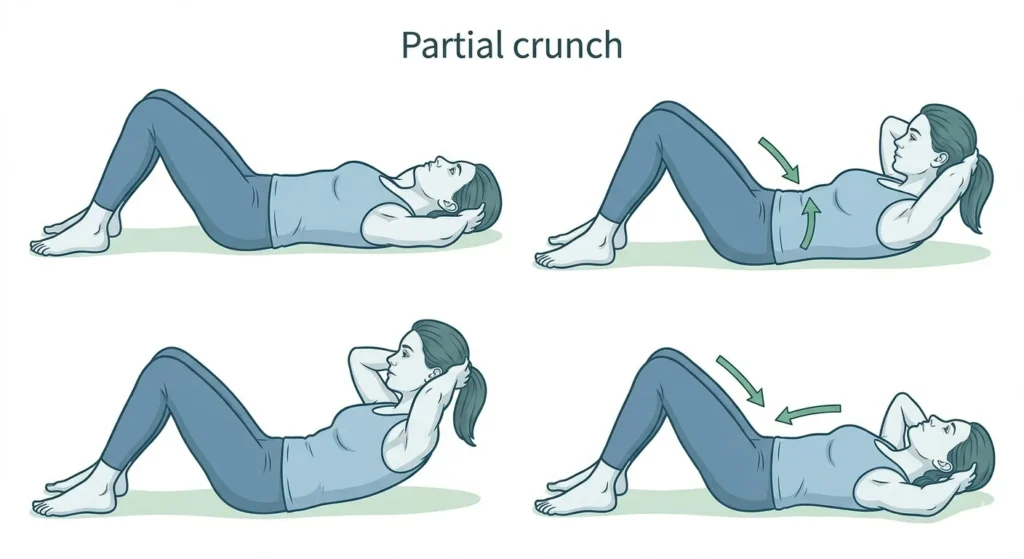
Partial crunches can strengthen the abdominal muscles and are one option for building trunk strength.
How to do it
- Lie on your back with your knees bent.
- Cross your arms over your chest.
- Gently tighten your stomach muscles.
- Slightly lift your shoulders off the floor.
- Hold briefly, then lower yourself slowly.
Beginner tip
Keep your neck relaxed and avoid pulling your head forward. Use your abdominal muscles to control the movement.
How often should you do exercises for lower back pain?
There is no single schedule that works for everyone. The right frequency depends on the exercise, your symptoms, and how your body responds afterward.
If you are new to exercise, start with a small amount that feels manageable. You do not need to perform all seven exercises every day.
As the movements become easier and your symptoms remain stable, you can gradually increase the amount of exercise you do.
Consistency matters more than trying to do too much in one session.
How to progress these exercises
Start with an amount that feels manageable rather than trying to complete a large number of repetitions straight away.
As an exercise becomes easier, you can gradually:
- increase the number of repetitions
- increase the length of a hold
- add another set when appropriate
- progress to a more challenging version of the movement
The goal is to improve gradually while maintaining good control.
If an exercise consistently makes your symptoms worse, do not simply push through it. Stop the exercise and speak to a physiotherapist or healthcare professional for advice.
Can exercises make lower back pain worse?
Yes. Some movements may aggravate symptoms, particularly if the exercise is not appropriate for your condition or you increase the amount too quickly.
Stop an exercise if it causes sharp pain, new numbness, significant pain travelling into a leg, or clearly worsening symptoms.
A temporary increase in discomfort can have different causes, so persistent or worsening symptoms should be assessed rather than managed by simply pushing through exercise.
Tips for doing lower back exercises safely
When doing exercises for lower back pain, keep these points in mind:
- move slowly and stay controlled
- start with a manageable amount
- do not force painful movements
- focus on comfortable technique
- breathe normally during each exercise
- increase repetitions or hold times gradually
- stop if symptoms become significantly worse
It is better to do a few exercises properly than many exercises badly.
When should you see a physiotherapist for lower back pain?
You should consider seeing a physiotherapist if:
- your pain lasts for more than a few weeks
- your pain keeps coming back
- your pain is affecting your normal activities
- you have numbness or tingling in your legs
- the pain makes walking, sitting, or sleeping difficult
- you are unsure which exercises are appropriate for your symptoms
A physiotherapist can assess your movement and symptoms and help develop an exercise or treatment plan that fits your situation.
Some symptoms require more urgent medical assessment rather than a routine physiotherapy appointment. Seek urgent medical care if you develop symptoms such as new bladder or bowel problems, numbness around the genital or anal area, or significant weakness in both legs.
Frequently asked questions
What is the best exercise for lower back pain?
There is no single best exercise for everyone with lower back pain. The most appropriate exercises depend on your symptoms, movement, fitness level, and the underlying cause of your pain.
Pelvic tilts, bird dog, glute bridges, and gentle mobility exercises are examples of movements that may be included in a lower back exercise program.
Is walking good for lower back pain?
Walking can help many people with lower back pain because it keeps you moving and helps you stay active.
However, the amount of walking that feels comfortable can vary. If walking consistently makes your symptoms worse, speak to a healthcare professional for advice.
How long does it take for exercises to help lower back pain?
Some people notice changes within a few weeks of exercising consistently, while others may take longer.
The time required depends on factors such as the cause of the pain, how long you have had symptoms, your overall health, and the type of exercise program you follow.
Should I exercise if my lower back hurts badly?
If your pain is severe, getting worse, or spreading into your leg, do not simply push through an exercise program.
It is better to speak to a physiotherapist or healthcare professional so your symptoms can be assessed and you can determine which movements are appropriate.
Related lower back pain guides
If you want to understand lower back pain better, these guides may also help:
You can also return to our lower back pain guide for a broader overview of causes, symptoms, and treatment.
Final thoughts
Exercise can be an important part of managing lower back pain for many people. The aim is not to complete as many exercises as possible, but to find movements that you can perform comfortably and progress gradually.
These physiotherapy exercises for lower back pain provide several options for improving movement, flexibility, balance, and strength around the lower back, hips, and core.
Start with a manageable amount, pay attention to how your symptoms respond, and increase the difficulty gradually.
If your pain is severe, continues to worsen, does not improve, or affects your daily life, speak to a physiotherapist or other qualified healthcare professional for individual guidance.
Medical disclaimer
This article is for general informational purposes only and does not constitute medical advice. It is not a substitute for professional diagnosis, treatment, or advice from a licensed physiotherapist or qualified healthcare provider. Always consult a healthcare professional before starting any new exercise program, especially if you are experiencing pain, have an existing injury, or have a pre-existing medical condition. See our How We Review Our Content page for how this article was researched and checked.

Rakesh Ranganathan researches physiotherapy content and SEO for clinics. Based in Ontario, Canada, he writes about lower back pain to help patients find clear, reliable information and to help physio clinics get found online.